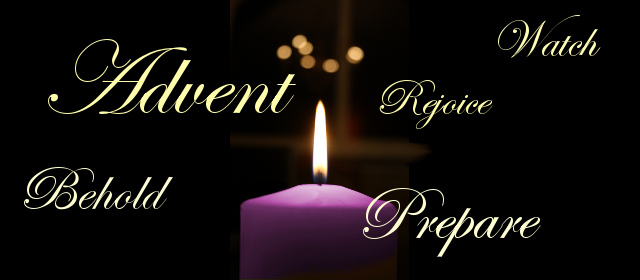
“Wake up!” – seems to be the message of this morning’s gospel reading – and possibly not a bad one for Morning Prayer at the end of November! But, I think, the appeal to keep awake needs to be heard against the broader Advent themes of Watching and Waiting.
Waiting is certainly one things we’re accustomed to just now – waiting for announcements of new tier systems; waiting to hear what will or will not be possible this Christmas. And there has been an anxious wait for the production of a vaccine, as the only real solution to our currently restricted way of life. And so, now, we celebrate the good news that, earlier than expected, more than one vaccine looks likely to be widely available soon.
Now that that the longed for vaccine has become a reality – the anxious waiting might just morph into anxious questions: Will it really work? And for how long? Is it really safe? What might the side effects be? And, if I get the right answers to that lot, when will I be able to get some? Waiting for an ideal, then, does not necessarily mean that we are prepared for it – when we are finally confronted with it as a concrete reality.
And so, to Advent – when we’re reminded that we are still waiting – for Christ to bring all things to completion. Whether we think in literal terms of Christ’s Second Coming, at the end of time, or of a more gradual outworking of his promises – there is unfinished business in the struggle against evil.
Our first hymn uses the word “longing”: “longing for light we wait in darkness”, and it implores Christ to “be our light”. In the Book of Psalms, the psalmist cries out: “When? When shall I come before the presence of God?”
Here again there is an urgency in the waiting – an overwhelming desire to see God – to see Christ face to face – and perhaps to know then, for sure, that faith has not been in vain.
But how will that reality feel when we finally get to encounter it? We might imagine ourselves, like the disciples, sitting at Jesus’ feet as he explains to us the things we’ve never really understood.
Or we might think back to last week, and the image of Christ as judge, before whom we’ll stand in fear and trembling – in which case we might be happy to wait a bit longer!
Perhaps we have no clear preconception of what that reality will be like – just a strong sense of being called to that eternal home which still lies beyond our grasp, but not quite out of sight or mind.
St Paul contends that the faithful are already enriched in Christ and strengthened by him; that Christ is already present among us, and visible in the spiritual gifts that he has given and continues to draw out from us.
And so, if we really do long to see the face of God, it’s not entirely a matter of waiting for God to act – it requires us to be awake and alert, and to watch for the signs of Christ’s presence among us – to recognise the gifts we share, here and now – to give thanks for them and to put them to good use. This season of Advent reminds us that, as Christians, we live in a kind of dual time zone – engaging fully in the everyday reality of our mortal life, while eagerly anticipating the eternal reality of life in God’s presence.
Advent reminds us that the kingdom of God is both “now and not yet” – IS already being established here but not yet complete.
Advent calls us to sit still long enough to notice what’s there under our noses: the gifts and graces that counter our fears and anxiety – the eternal light that continues to shine through each temporary darkness.
This is not a time for busy-ness then – a time to “prepare” with plans and “to do lists” and frantic running around – but a time to prepare ourselves – to cultivate an attitude of mind: of openness to present realities we haven’t seen before; of glimpses of all that lies beyond those present realities.
And, as we watch and wait for the signs of God’s life among us, awake to the opportunities that he sets before us, perhaps we may see more clearly the next steps in our own lives that will bring us closer to the kingdom of God.
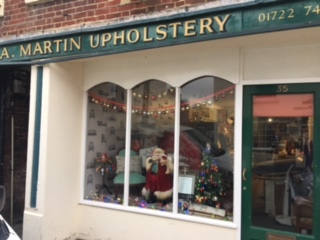
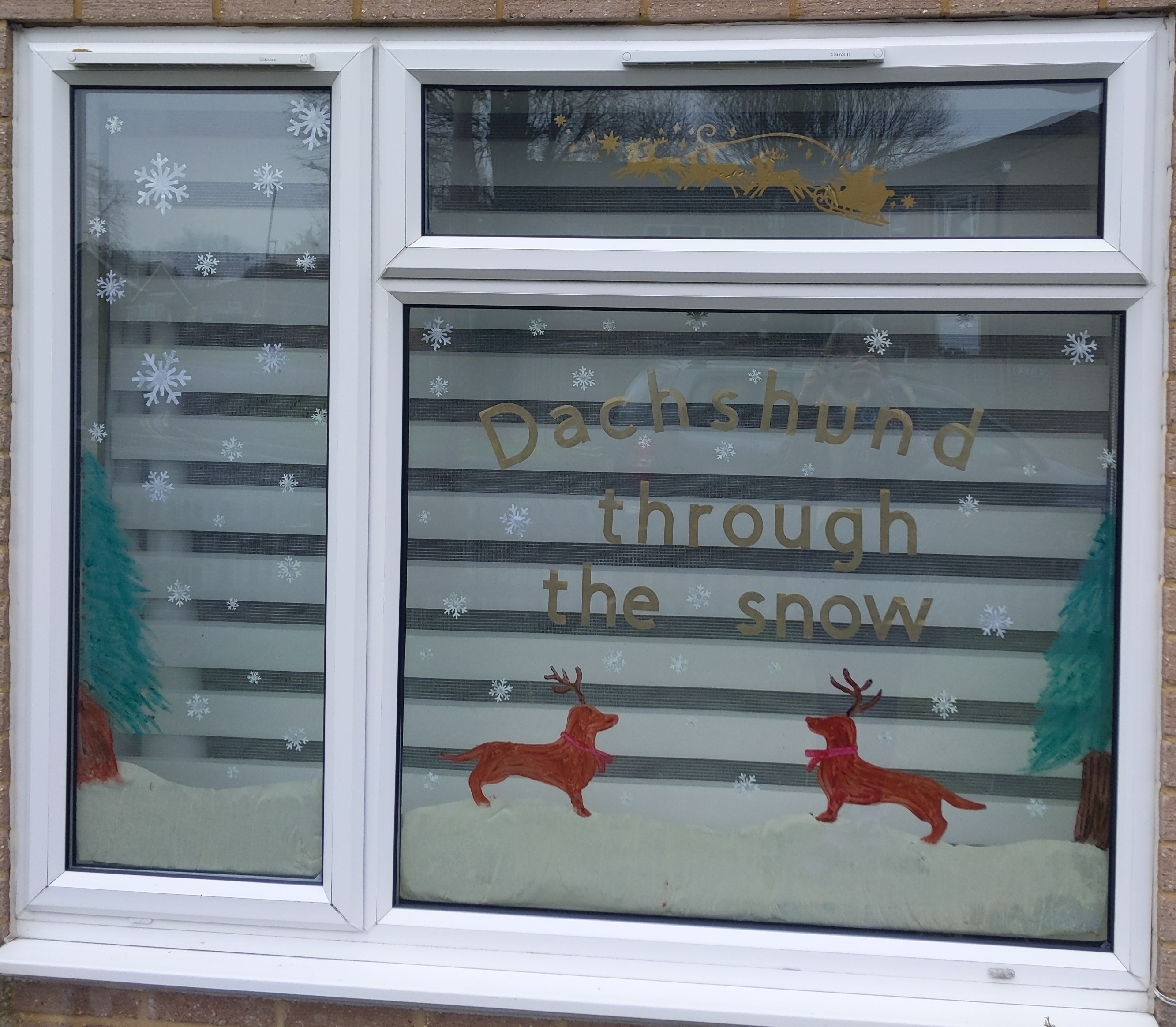
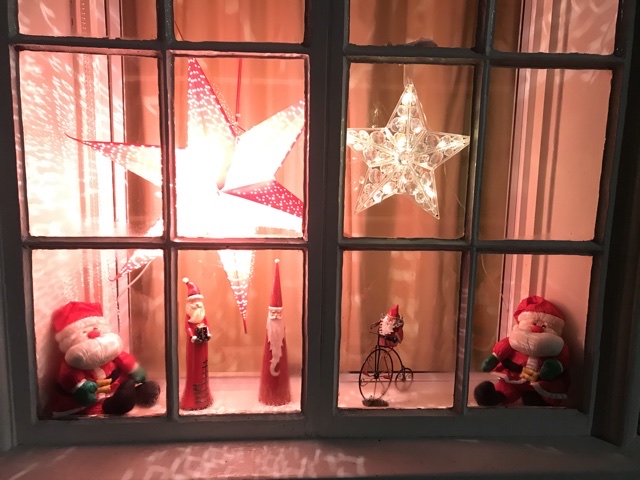
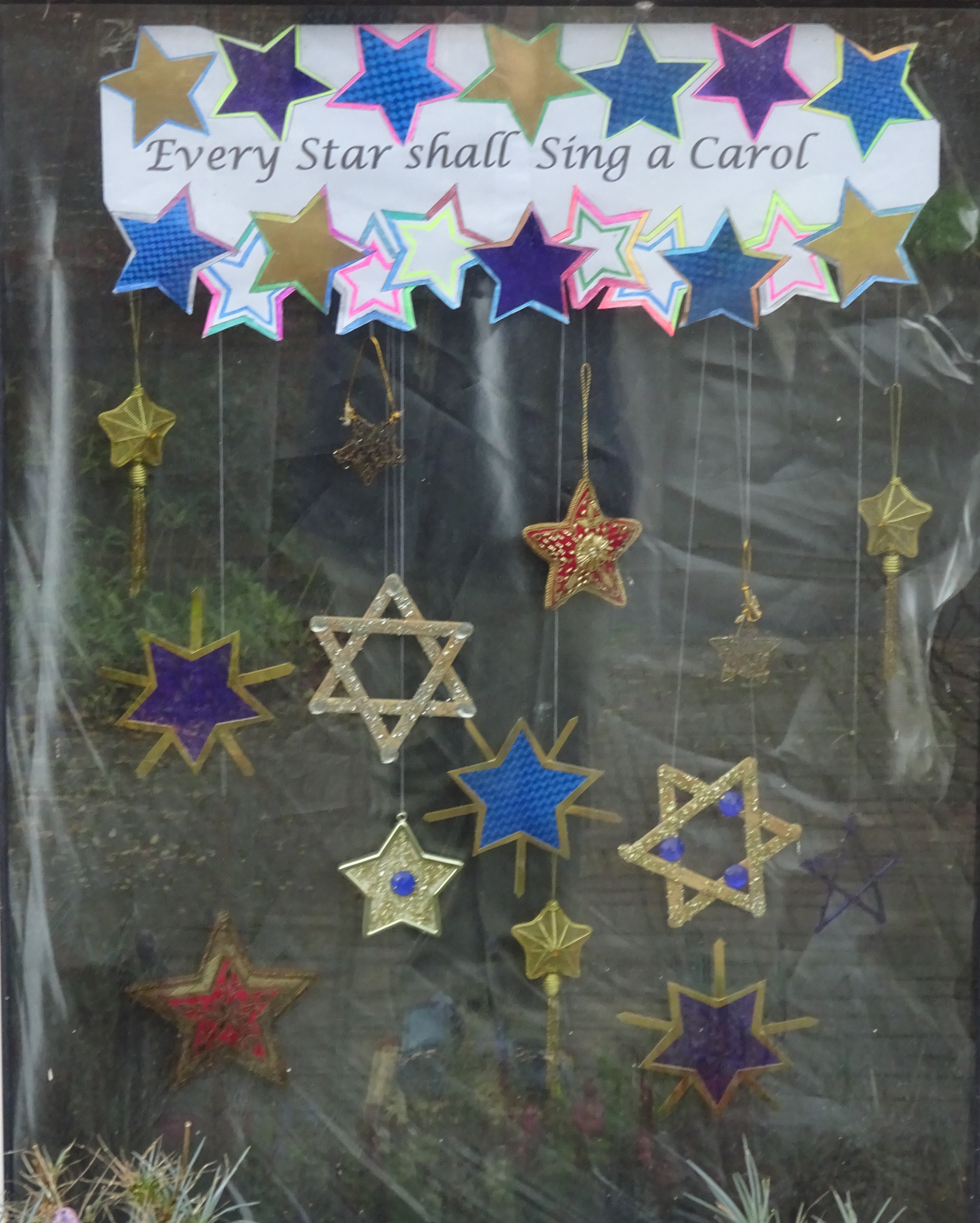
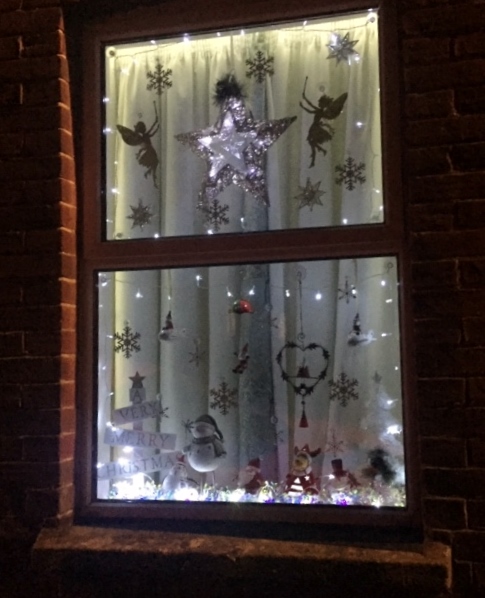
In the absence of Christmas Carols Service or Town Treelighting, we’ve encouraged people to decorate a window – to bring a little Christmas cheer.
Below are some of the results!
Charlotte PontingRay and Elaine JohnsonThe Mcnulty family (notice the doormat!!)
A. Martin Upholstery – North StreetMichelle MarchmentAnother “blaze” from North Street!Childhood wonder! Window prepared by Tasha Cooney (and admired by Harrison!)
Today I want to speak about Consequences, Kings and Caprinae – and I appreciate that that isn’t quite alliteration, but it does give you a short introduction as to where I’m going!
As we come to the end of the church’s year, on this last Sunday before Advent, we come to the end of our focus on St Matthew for our Gospel readings. I remember standing here this time last year and advising those in church that we would be in for a bumpy ride: St Matthew’s Gospel contains within it some of the most comforting sayings in scripture – “Come to me, all you who are weary – and I will give you rest”; or “Blessed are the poor in spirit, blessed are those who mourn, blessed are the meek, blessed are the merciful..”; and some inspiring words “Go and make disciples of all nations – behold I am with you always, to the end of the age.” But it also includes some of the most difficult and challenging teachings of Jesus. And Chapter 25, from which we’ve just heard, is no exception: last week we heard the fate of the slave who failed to use the talent – the coin – entrusted to him by his master; and today’s parable of the sheep and goats seems equally unforgiving. And there’s a very clear message that there will be consequences in the next life for the way that we live today. In this particular parable, the judgement is unequivocal and final – some are destined for eternal life, and others for eternal judgement, there is no middle ground. That vision does fit with Matthew’s liking for hard edges – for a clear dividing line between the faithful, as he seems them, and everyone else. And yet, even so, the core of this parable is actually quite the opposite – emphasising the need to show kindness to those that most need it, whoever and wherever they may be The kindness or the indifference with which we treat “the least” of our brothers and sisters is the way that Christ deems us to have treated him – and in turn, determines the way that he will treat us.
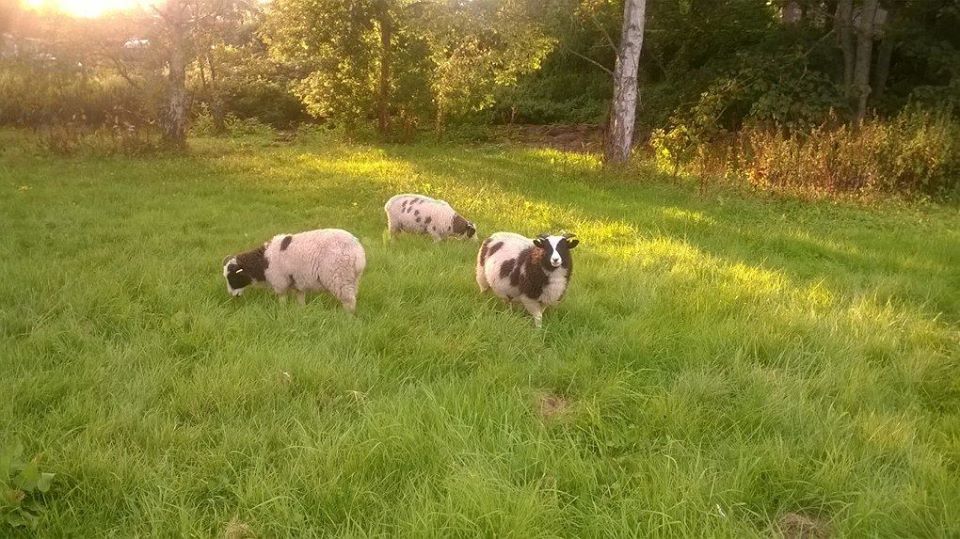
So what should we make of Christ the King – who, in this church, is depicted in the apse behind me, looking down from the judgement throne? Clearly our own society, even with a reigning monarch, is very different from that of the 1st Century, where kings ruled in a more direct sense. And, for me, the harsh judge of today’s parable brings to mind a rather troubling image of a celestial Donald Trump – issuing executive orders at whim, and sending away into the outer darkness anyone whose opinions don’t fit with the version of the truth he wants to present. Fortunately, St Paul rides to the rescue today – in his letter to the Ephesians. Here the Son of Man, seated on the throne of glory, is identified clearly as the one who was raised from the dead, having first lived among us. For Paul, then, “Christ the King” is not some distant, despotic figure – he is the Crucified Saviour, immersed in the sorrows of the word – and whose own human face we can still recognise, in the features of downtrodden and suffering humanity today. It is because God does understand what it is to be human that he is such a powerful judge – there is no wriggle room, no excuse of frailty in front of one who’s seen and lived it all before us. Come judgement day, it seems, there is nothing more to be said – our actions will speak for themselves. At this time of year, as Christmas approaches, we inevitably face a whole raft of appeals from charities at home and abroad. And this year, in particular, with so much financial uncertainty, we may be left with the overwhelming feeling that we just can’t do everything we’d like to. But can we, in watchful Advent, take the time to notice and to seek those who seem to be in greatest need, whoever and wherever they turn out to be? Can we make Advent a season of preparation and of kindness, in which to work out what we can do for the least of these – whether or not that involves giving money, or spending time with someone, or perhaps making a change of lifestyle to correct the negative impact we have on others? And now to Caprinae – the sub-family to which both sheep and goats belong. Sheep and goats may not always appear as different as our Gospel reading suggests. I still remember the disgust in my household, when one well-meaning tourist referred to our Jacob’s sheep as “spotty goats”! And if woolly, western sheep can be so easily confused, then I suspect the skinny sheep of Palestine are even more similar to the goats there – proving what we already know, that appearances can be deceptive.
Scientifically, there is a difference between the two: sheep have 54 chromosomes – and are referred to as the Ovis genus; whereas Goats – the Capra genus – have 60 chromosomes. And they behave differently. Sheep tend to graze, munching away wherever they are put (although if you ask my neighbour about our sheep and her vegetable garden, she may question that theory!) Goats, on the other hand, are professional foragers – wandering at will: which is why we often see them tethered here, as they can be quite destructive when left to it.
Sheep are willing to be led – “my sheep hear my voice.. they know me, and follow me” – and they tend to flock together. Goats tend to be more independent – of us and of each other. They are arguably more intelligent than sheep – and like to do their own thing. So is that what the parable is getting at – that we are going to be judged on the degree to which we take account of others, rather than just ourselves? As with the animals, so with people – we can’t possibly judge good from bad simply from appearances: and, in any case, it’s not our place to judge. It’s not even that simple with ourselves, either: none of us is entirely good or bad – like the “spotty goats” that are in fact sheep – we almost certainly display confusing elements of both.
All of us, I suggest possess noble, selfless instincts – that drive us to do good things, to think good of others, to put others first; but there are always those selfish doubts niggling away – am I being taken for a ride here; do I really want to do this; what about me for a change?
And so we will need to work at resisting our goat-like tendencies, and cultivating our sheep-like awareness of others – if we are to be clearly recognised by Christ on the right side of the divide.
And so, to risk another bout of alliteration, Advent calls for an attitude of attentiveness. We are invited to be attentive to ourselves, and the way we live our lives; attentive to others, and the things that might transform their lives for good; attentive to God – who gave us life and, in Christ, has redeemed us all.
Address given at (virtual) Remembrance Sunday service 8/11/20
Readings: Ecclesiasticus 44; Romans 8: 18-27
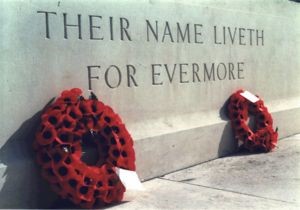
If there were a prize for the most over-used phrase of 2020, two very strong contenders would be “new normal” and “unprecedented times” – both of which have become pet hates of mine! “New normal” would seem to suggest that we’ve all somehow changed now, and arrived at a settled state of being – whereas in reality things seem to change and keep changing with alarming speed. And as for “unprecedented times”, that would seem to suggest that there’s never been anything as bad as this before – but I suspect that many of our ancestors would beg to differ. We ourselves may never have known anything as bad as this, but that doesn’t mean that similar things – and worse things – haven’t happened before. After all, what is Remembrance Sunday for – if not to call to mind the sufferings of those who lived through the great conflicts of the past AND the strength of the human spirit to endure and overcome those things?
And perhaps our experiences of 2020 bring us closer to understanding that war-time experience which most of us haven’t lived through: the curbing of certain freedoms; separation from our loved ones; the starker reality of death; and the anxiety and uncertainty that flows from all those things. Those sensations, it seems to me, reflect both past and present realities. And now, as in the adversities of war, we see both the best and worst aspects of humanity displayed, in the flowering of community-spirit and human compassion, but also in thoughtless or deliberate selfishness. In World War 2, and the years which followed – many things were subject to rationing, as certain foods and materials were in short supply. In 2020 we’ve also experienced those shortages – but largely due to panic-buying – individuals taking far more than they need, without any concern for other people. However “new” our present “normal” may be, human nature is still as complex, and fallible as it ever was. Of course 2020 has not just been about Covid 19. It’s been argued this week that the pandemic has provided the perfect smoke screen, behind which terrorist organisations have begun to regroup. And there’ve been fresh acts of violence in France, Afghanistan and Austria – resulting from a “war of ideas”: the determination of some to impose their own ideology on others, or to destroy those who stand in the way.
In the build up to the American Presidential elections, we’ve witnessed a particularly fierce tribalism – a trait from which our own domestic politics is not immune. Such tribalism is perhaps inevitable in a time of war – when a defined enemy has to be defeated; and the people emboldened for the long haul. But in a time of peace, manipulating those same tribal instincts is a dangerous game – and in the time of a pandemic, possible a fatal one.
Faced with all those challenges, and more, we may either despair, or we can recognise evil for what it is and refuse to give in to it – to strive for better and determine to change what we can.
The Lebanese writer, Khalil Gibran, writing at the turn of the 20th Century, said: “I have learned tolerance from the intolerant, and kindness from the unkind; yet, strange, I am ungrateful to those teachers.” The suggestion then that, in recognising what is wrong, we can in fact chose to do what is right, with greater clarity and resolve. In rejecting the intolerance of the religious fanatic; the irresponsible egotism of the populist politician; the selfishness of the panic-bulk-buyer; we may in fact discover what human nature is meant to look like – what we can become when we truly love our neighbours as ourselves.
St Paul speaks of hope – not so much in the things that we see around us, but in the things we do not yet see – not, we might say, in any “new normal”, but in what is constantly being revealed to us about the way ahead. We can already glimpse that future hope, in the words and actions of the people around us. Yes, there are those whose sole concern seems to be to “make a name” for themselves – to win power, influence and instant recognition – irrespective of any guiding principle, or concern for the common good. And yet there are countless others working tirelessly – to do whatever is necessary to keep things going – to get us through this pandemic – to help us reach the “promised land” of a world where new, safe vaccines can free us from our present anxieties. Like the soldiers of the World Wars, and other battles, we will never know who all those people are – and yet, we can still recognise the value of what they do – of the personal sacrifices that they have made for good of us all. “Their glory will never be blotted out”, as the writer of Ecclesiasticus expressed it.
And from the past, we can learn the lessons of war – that the suffering and hardship of 2020 is neither “normal” nor “unprecedented” – and that, while we are living through them, those things seem all too real and never-ending – in truth life will not always be like this – human societies and organisations can be rebuilt.
Those of us who have faith in Jesus Christ draw hope from his example – of overcoming the worst atrocities of human violence and degradation – and revealing a new life beyond that suffering. And all of us may draw hope from the power of the human spirit – formed in God’s likeness – that has enabled soldiers to find comradeship in the heat of battle; and sworn enemies to find reconciliation when fighting was done. All of us may draw hope from the power of nature – which has healed the man-made scars of the battle field.
This year as every other, let us remember all those who have faced the realities of war – and so put into perspective the difficulties we face today (however painful those experiences may be) – and so draw hope for a brighter tomorrow.
Last Sunday saw the enthronement of the 98th Archbishop of York – Stephen Cottrell. And while he may not have that much influence on us, in this southern Province of Canterbury, he is nevertheless an interesting character.
I once heard him preach at St Paul’s Cathedral – back in 2011, when it was surrounded by Occupy London protesters in their multi-coloured tents – but that service sticks in my mind mostly because of the sermon. And I have to confess, for me that is usually NOT the case!
9 years on and I remember him giving both a very erudite reflection on Dante’s “The Divine Comedy”, and also a very human recollection of his childhood. As a 10 or 11 year old, he said, he enjoyed nothing more than going with his friends to the local shopping centre and indulging in the slightly risky challenge of “running up the down escalator” – pitting himself against the motion of the machinery, and hoping he didn’t meet anyone else trying to come down.
And that “gravity-defying” experience, he said, was rather like that of Christian ministry – which at one and the same time can be both exhilarating and exhausting! I don’t know if that image is still in his mind as he begins his new ministry as an Archbishop – but there’s no doubt that, like the rest of us, he will face a challenging time in the months and years ahead.
As he spoke on last Sunday, there were two themes that struck a chord with me, and that seem to resonate with this morning’s readings for “Bible Sunday”.
He spoke of the Church as a place where we are called to demonstrate our love, for each other and for our neighbour, through generosity of spirit and active concern for the weak and vulnerable. He spoke of his determination that the Church of England would respond to the recent report on Sexual Abuse not just with hand-wringing and apologies, but with real systematic change. And I’m quite sure that determination will last.
In the context of Covid 19, he described the wearing of face masks as an act love – something which may be inconvenient and sometimes seriously annoying to most of us, but potentially life-saving to some. And so, to paraphrase St Paul, “those who are strong ought to put up with it, for the sake of those who are at risk”. And I think that applies to other aspects of our church life too. Ever since July, when we took our first steps back into public Worship, there’ve been frustrations for us, both at the things we can’t do yet, and at the way that certain things have to be done differently. And for those of us leading worship, the need to re-think absolutely everything – from wedding rings to Communion wafers, to shorter services without service sheets – that’s all been pretty exhausting. And, sadly, unlike the Archbishop’s escalator game it hasn’t also been quite so exhilarating.
I know that some people are disappointed that I have followed the guidelines quite so firmly – and yet I have to say that I am disappointed that anyone might expect me not to. Protecting the weak and vulnerable is absolutely at the heart of our faith – not just in the words of St Paul but in Christ’s own ministry and teaching.
And that does mean sometimes doing without things, or doing what we’d prefer not to – seeking through our worship to build up those of our neighbours who most need it, and not just seeking to please ourselves. The alternative would be to cut the vulnerable adrift and cater for the healthy – and I’m really not sure how that could be seen as a demonstration of our love for each other, and for our neighbour.
The second thing that I picked out from the Archbishop’s comments was that it is his job “to bring alive the Christian message of hope” – again perhaps something of an “uphill sprint” just now but one to which all Christians are called.
As many people, perhaps most people, struggle to grasp the reality of the situation we’re living through – let alone what the future might look like – being able to offer some sense of hopefulness is vital.
And as we celebrate Bible Sunday an obvious place for us to look for that message will be in the pages if Scripture, as Jesus himself did to inhabit the words of Isaiah: “The Spirit of the Lord is upon me, for he has anointed me to bring good news”.
There is, though, a question of how we do that – of how we offer hope into a context of mixed emotions and fears and levels of understanding.
It’s tempting to start with Scripture and to pull out the things we think people need to hear. But shouldn’t we really focus on discovering what people are really interested in or concerned about, before we start offering any suggested answers?
Answering questions that no-one is asking cannot bring hope – at best it just leaves us talking to ourselves.
Just as our worship is at its richest when we bring all of our lives before God – “warts and all” – so our use of Scripture is most powerful when we acknowledge the things we’re struggling with, or that we can’t make sense of, and then “mine the tradition” – searching the Bible for meaning that resonates with reality. Pray the Psalms – with their very earthy mix of despair, of anger, of resilient faith, of hope and salvation. Read the Gospels with their central message of love triumphant over hatred, of good over evil, of light shining through the deepest darkness. And if we can do that not only with our own experiences, but also for those of our neighbours, then perhaps we can bring that sense of hope that is so desperately needed.
Just to be clear then, I am not encouraging you to follow the boy Stephen’s example and heading into town to run up the down escalators – you may be relieved to hear!
But I do want us to share his aspiration to be bringers of hope – to do everything we can to listen to those around us, to gauge what the real challenges are, and then to offer some meaning and perspective from the story of our faith; to express that faith in a way which will be understood and make sense to our neighbours; to recognise the good things that are happening out there among out neighbours – the acts of love and self-sacrifice that are too easily taken for granted, and so to draw hope, and give hope, by celebrating and giving meaning to those things too.
This Bible Sunday reminds us then of both the rich treasury of our faith – and the need for humility in sharing that faith.
We do not have all the answers – we cannot solve all the problems of our community, let alone the world at large, but we can be part of that solution.
Our scriptures and our faith give us a unique perspective on the events unfolding around us all. We are called to offer that perspective – as ably and as sensitively as we can.
Addressgiven on Sunday 11 October 2020 – marking the 17th Anniversary of Wilton Parish Church’s Dedication
I think it’s fair to say that this anniversary year has NOT quite unfolded as planned! Concerts, social events, fund-raising campaign – so many things have been either shelved or postponed as we react to the unplanned events of 2020.
Who would ever have imagined this House of Prayer being closed to the public, or our celebrations of Easter here being cancelled?
And one of the consequences for this Dedication Festival is that I can’t do my usual trawl through the Visitors Book or comments on TripAdvisor – because this year there aren’t any!
So instead, I want to reflect on some of the things that have kept us busy over the past 6 months, and where this Parish Church now sits in relation to the town it serves, and those many other people who feel some kind of connection to it. As you will know from experience, this year has demanded a certain amount of creative thinking – faced with a wall of things we can’t now do, we’ve had to invent new ways to achieve the same goals. Our efforts to be a parish church – and to reach as many of our neighbours as we can – have most recently involved the filming and then posting online of services like this one.
And within that process I discovered a new phrase. Whenever I take the basic file from the recorder, and ask my computer to convert it into a suitable format for our website and Facebook page, the same phrase pops up.
As I click a button that says “export”, a little blue line appears on the screen, to indicate progress – and above it the two words “consuming” and “time”.
It usually takes 30 – 40 minutes to complete that process, so you’ll see why I’ve had time to notice them! And it occurred to me, while twiddling my thumbs, that depending on where you put the emphasis, those two words could mean quite different things.
I assume it’s meant as “consuming time” – the time taken for the computer programme to consume the information on my memory card. But switch the emphasis to the second word, and it suggests a more intriguing concept of consuming time itself!
And I wondered what would happen if I applied my little word game to the world outside my study.
“Consuming time” makes a lot of sense, having witnessed this week’s relaunch of Wilton Shopping Village as The Guild. Their marketing has been very skilful, with new road signs, and enticing images on Facebook and Instagram clearly designed to draw us there, and to prompt some conspicuous consumption.
And if we wander into Salisbury, or one of the larger shopping centres, we’re likely to observe not only those in the act of spending money and acquiring things, but also those who seem to draw their retail therapy simply from the atmosphere, consuming the experience of being there – albeit a rather changed experience this year.
So whether we approve or not, consuming time seems to be very much a part of our culture today. But what about my rogue interpretation of consuming time? Are we in fact using well the time we’ve been given – or are other things/other people eating it all up for us?
Many of us always seem so busy – with little time to enjoy the things we’ve acquired, or even the gifts of nature that we haven’t needed to acquire?
How much time do we spend “On hold” waiting for a real person to speak to us on the phone? How much time do we spend in meetings or filling in forms before we can actually get on and do something? How much time do we lose, waiting for our internet provider to actually provide internet access? How much time to we waste sitting in the traffic queue o the Wilton Road, wondering why our 2 minute journey home is taking for like 20?!
Clearly we can’t only do the things we find fulfilling and avoid those tedious things that have to be done – lovely though that would be – but it’s worth checking the balance now and then.
Are we doing certain things because they are necessary and helpful – to us or to someone else? Or are we doing them just because we think we really ought to? And if it IS out of a sense of duty – rather than necessity – then we need to be careful, so that we don’t wind up worn-out, confused and no use to anyone.
In the life of a church – an anniversary, such as the one we celebrate now, is as good an opportunity as any to take stock and assess what we are doing, and how we do it.
As we celebrate 175 years of life in this building – are we busily intent now on preserving this building for another 175 years? Or is there more to it?
On one level, we can’t avoid that challenge of maintaining this building, – or the meetings and form-filling involved in keeping it safe.
But might this anniversary also inspire us to refresh our sense of purpose – to reflect on the people who’ve cared for and worshipped in his church since 1845, why they did so, and what it is we think we’re doing when we come here?
Isn’t the surest way to ensure that this building is still standing in the year 2195 to celebrate the life that is here now, and to try and build on it?
And if we can’t do all those things we used to do, then let’s seize any new opportunities that arise and do whatever we can now do as well as we can, with whoever wants to be a part of it all.
The chief priests and scribes in today’s gospel reading clearly saw themselves as guardians of the Temple – fulfilling their duty by repelling all innovation or criticism. And there’s perhaps a warning for us, who know this place so well, not to allow ourselves to become guardians of the past but instead to seek to be enablers of the present.
At this time we have to “guard” the way this church is used, in order to avoid infection. We can’t open our doors every day as we used to. And yet, even without the Morning Prayers that 4 or 5 of us used to offer here each day, easily ten times that number of people ARE now connecting with our daily prayer online. Even when it is locked, this Parish Church can still be a focus for prayer. As with so many things in 2020, we’ve stumbled across new ways of doing things – which may yet prove to be temporary; or a better alternative to what existed before; or, more likely, a new opportunity to add alongside the tried and tested.
The important thing is that we don’t denigrate those things when they seem to appeal more to others than to us – “perfect praise”, Jesus suggests, may be found in the most surprising of places and people.
This Temple to God’s glory is not just for us, and neither is it the only place in Wilton where God is to be found.
God is not contained in THIS house, any more than in the Temple that Solomon built – and yet, still, his presence can be felt here, can be seen here reflected in glass and stone – and can be communicated from here, through camera lens and phone or computer screen.
Let us give thanks then for the vision of Sidney Herbert and Ekaterina Voronstov, in providing this church as a window on the reality of God’s presence on earth, and a glimpse of the life of heaven.
And let us always aim for beauty and truth in our worship, so that there are moments when we find ourselves lifted beyond time – and resting in the timeless presence of God.
Record of the Annual Meeting of Parishioners – May 2019
1. Attendance. 63 Parishioners were present, 15 written and many verbal apologies had been received.
2. Electionof Church Wardens. The following were unanimously elected:
Mr Peter Gulliver for his third year.
Mr Andy Tyrer for his second year.
The Chairman expressed his thanks to the Church wardens for their diligent work on behalf of the Parish over the past year, this was greeted with applause.
3. Confirmation of Deputy Church Wardens. The Rector announced that Katie Ray had been nominated by St Catherine’s DCC and Bill Hewlett and Sylvia Holloway at St Peter’s. The Churchwardens confirmed that they were content to delegate responsibilities accordingly.
There being no other business the meeting was closed.
Minutes of the Annual Parochial Church Meeting
held in the Parish Church
on Sunday 12 May 2019
Chairman: Revd Mark Wood. Present: 63 Parishioners
1. Apologies. See above.
2. Inventories. The Church inventories were circulated around the meeting.
3. Minutes. The minutes of the 2018 Annual Church Meeting had been made available and the Secretary stated that they had been scrutinised in detail; the Chairman asked that they be agreed.
Proposed: Christine Stott Seconded: Lynn Morley
All in favour
4. Annual Report 2018. The Rector quoted from the Annual Report 2018 (Annex A – published prior to the meeting) referring to changes in personnel, church groups, community involvement and matters relating to the three church buildings.
5. Treasurer’s Report. (An extract of the accounts was made available at the meeting, the full accounts having been previously displayed in church.)
The Treasurer drew attention to the key points as follows;
a. General St Mary & St Nicholas Church recorded a small surplus
of income over expenditure in its General Fund over the year, amounting to £643, on a turnover of some £101,000. This included the final two months payment of our Diocesan Share for 2017, which had to be carried forward to this year and was paid in full. A grant of £9,760 from the Wallace Bequest allowed the final two months’ worth of our Diocesan Share demands for 2018 to be paid in full and thus no liabilities have had to be carried forward to 2019.
b. Expenditure Expenditure in 2018 was broadly similar to 2017, with the principal expenses being our Diocesan Share, Insurance, Gas and Electricity charges, maintenance and repairs to the boiler system. The major upgrade to our electrical systems throughout the Church, which was started in 2017, continued in 2018. Payment for this work amounted to some £45,500 and was met principally from the Appeal Fund, pending a further bid to the Preservation Trust, whose income is designed for just this purpose.
c. Diocesan Share The Parish Diocesan Share contribution was set at £58,545 in 2018 – or £4,880 monthly, with St Catherine’s and St Peter’s contributing 6.5% and 6% of this sum respectively. Once again this represented over 50% of our annual expenditure. Our Share contribution from the Parish for 2019 has been marginally reduced and will now amount to £58,182 or £4,850 monthly, with St Catherine’s and St Peter’s continuing to bear their 6.5% and 6% burden respectively.
d Charitable Giving Donations made in 2018 were split between selected ‘Charities of the Quarter and amounted to some £2,050.
e. Stewardship Collections at weekly Services and regular monthly donations continued to form the bulk of our income. Together with donations to the Church and support to our chosen monthly charities, this amounted to £61,300, a figure broadly similar to 2016. Some 76% of these donations were Gift Aided.
f. Other Income Fund raising events, Parish Fees for weddings and funerals, concert fees and a grant from the Wilton Educational Trust all contributed to the remainder of the overall income for the year. This amounted to a total of £101,620 for the Parish.
The full summary that the Treasurer provided is at …………………………………Annex B
Liz Pike drew attention to the large bank charges and suggested that it should be possible to find an account with a bank that didn’t charge. The treasurer agreed to look at it.
The Rector thanked the Treasurer for his enormous contribution to the Parish. This was greeted with much applause.
6. Stewardship – Parish Giving Scheme. The Rector reported that the parish is now registered with the scheme and gave a short reminder of the mechanics of the scheme. Those currently giving by Standing Order would shortly be invited to transfer into the scheme, which could then be extended to others if they wish to take part.
Nick Barsby raised the issue whether collections would be continued to be taken during services, and whether “tokens” might be used for those who donate purely through the Giving Scheme. The general consensus was that collections would remain, and that tokens might be made available to those who wished to sue them.
7. Appointment of Examiner. The Rector thanked Ray Stedman for his diligent examination of the accounts and said that he was willing to serve again. He was appointed examiner for a further year.
8. Electoral Roll. The Rector announced that Lucy Dalrymple was to remain as Electoral Roll Officer but in future the administration of the Roll was to be through the Parish office.
The numbers on the Roll were 184 (with one addition since the date of publication) – a significant fall from previous years but a more accurate reflection of those actively involved in the church.
9. Rector’s Address. (Annex C)
Peter Gulliver, as senior Churchwarden, addressed the meeting and thanked the Rector for all that he had done over the past year. This was greeted by enthusiastic applause.
10. Election of the Parochial Church Council for the Year 2019/2020. The following had been nominated and seconded. The Rector asked that they be accepted.
Nominee
Appointment
1
Katie Ray
St. Catherine’s DCC
2
Earle Broadbent
3
Nick Barsby
4
Dawn Humphries
5
Lisa Humphries
6
Lynn Morley
7
Richard Norris
8
Christine Stott
9
Neill O’Connor
Treasurer
10
Tim Robertson
Secretary
11
Madeleine Drage
Deanery Synod Member
12
Christine Lawson
Deanery Synod Member
13
Tim Purchase
Deanery Synod Member
Ex-Officio:
Rector Mark WoodCurate Caroline Titley2 Churchwardens Peter Gulliver Andy Tyrer
Proposed: Liz Pike Seconded: Peter Lawson
All in favour
10a. PCC Officials. Following a proposal by the Rector, N O’Connor and T Robertson were duly elected as Treasurer and Secretary respectively.
11. Appointment of Sidespersons. The following had volunteered for Sidesperson duties for the forthcoming year. The Rector asked that they be approved.
Alexandra Kinsey
Andrew Kinsey
Ann Hindley
Ann Meredith
Caroline Fanner
Christine Stott
David Newth
David Willmets
Diane Poynting
Emma Codrington
Emma Cox
Frances Bennett
Grahame Booth
Jane Stedman
Lucy Dalrymple
Peter Gale
Pippa Tyrer
Ray Stedman
Richard Lord
Richard Norris
Roger Best
All in favour
12. Safeguarding – “Past Cases Review”. The Rector reported that the Diocese was undertaking a review of safeguarding matters, asking each Parish to investigate records since 1950 and to ensure that any allegations of abuse, by clergy or Church officeholders, be reported to the Diocesan Safeguarding Officer by the end of May.
Written records had been checked and contact made with two former incumbents and former churchwardens/church officers. Parishioners with any knowledge of allegations were also asked to contact the Rector before the end of May.
13. Future Events. The Rector drew attention to the following:
a. 30 June “St Peter’s day”. There would be a public meeting at St Peter’s, to try to reignite interest in a development plan for the building. The Rector has been advised that the cost of the church to mains electricity would be c.£2000 and that there might be sources of funding available for this.
b. St Edith’s Fayre on 15 September. This will mark the beginning of Wilton History Festival. Building on the previous year’s pattern, with Civic Service in the afternoon, it was to make this our main social and fundraising event for the year – with stalls and a Grand Draw during the time between the two services.
Helpers would be needed to manage this.
c. Lighting of the Town Christmas tree. There was uncertainty over the timing of this event – with a possibility that it would be moved to Friday 6th December.
d. There were also new possibilities at the parish Church, as the Salisbury Community Choir would no longer be holding their annual Carol Concert in Wilton. Possibilities included a joint concert with the District Band, to be held in either the Michael Herbert Hall or church and Community Centre and a Carol Service, requested by Francesca Wilson. Peter Redpath was keen that the latter should follow the nine lessons and carols format. The Rector stated that careful balance was needed – since St Catherine’s already hosts an Advent Carol service in this format and a similar Christmas Carol service on one of the two services before Christmas.
14. Distribution of Holy Communion. The Rector summarised the revised system for distribution of Communion at the 10.45 Eucharist – designed to avoid the need for the congregation to negotiate the Chancel steps. He noted that this revision was not universally welcomed, but that it has seemed to work extremely well, both “aesthetically” and practically, and that he proposed we should continue.
This was met with general approval, with some contrary opinion acknowledged.
15. Items by Consent.
a. Christine Lawson raised the subject of the promised crossing of the A36 from Wilton Hill. Ivan Seviour, on behalf of the Town Council, confirmed that the crossing was still planned and part of the agreement needed before the developer could “sign off”, but that there had been difficulty finding a suitable contractor.
b. The Rector drew attention to Morning Prayer, which is held at 0930 each morning, as a useful spiritual and refreshing ten minutes to start the day.
16. Signing of the Inventories. The inventories, having passed scrutiny by the meeting, were signed by the Senior Church Warden and a lay member of the congregation. Ann Hindley thanked Peter Gulliver for his excellent re-writing of the inventory. This was greeted by generous applause.
There being no further business the meeting closed at 12.55 PM
On Friday. very many people in the United States, and elsewhere, marked the 19th Anniversary of 9/11 – the deliberate destruction of the Twin Towers of the World Trade Center in New York, and the loss of those who were working in them.
And, among the coverage of that anniversary, I came across a story about the “Ground Zero Cross” – a 20 foot section of steel girder, with its cross bar, which had been discovered among the debris of the North Tower, and which clearly resembled the empty cross of Christ. Once this structure had been exposed, it quickly became a sort of shrine for those working on the site. And, for many a it was a powerful sign of Christian hope – that just as the pain and desolation of Good Friday would lead on to the resurrection and new life, so the pain and desolation of 9/11 would not have the final say – life would flourish again, albeit a life changed by experience; human kindness and resilience would shine through that initial sense of hopelessness.
Archbishop Rowan Williams – who happened to be in New York at the time of the attacks – was asked the question “where was God that day?” And after a moment of thought, he pointed to those selfless acts of bravery and compassion and said “there” – in that “selfless” and “self-giving” human response” God’s love was realised.
And if that seems a slightly evasive answer, then I’d want to defend it on the grounds that it brings us right back to the message of the Cross – and victory won over evil not by a dramatic show of power and divine intervention, but through human cost and self—giving, human suffering giving way to hope.
And so, back in 2001, for many working to clear what remained of the twin towers, and many others since, that Steel girder Cross made absolute sense – and was blessed as “symbol of hope for all”.
But that wasn’t quite true. The organisation known as “American Atheists” – the US equivalent of our “National Secular Society” – quickly objected to the presence of any religious symbol on what is, clearly a public space. What represents a symbol of hope to some, suggests a kind of “power-grab” to others who don’t identify with that symbol. And in the end, it took two Supreme Court judgement to rule that the Cross should stay, and it now stands in front of the” 9/11 Memorial and Museum” – where it can be seen either as a religious symbol of hope, or as an important historic artefact.
In the context of our own observance of Holy Cross Day, it’s worth noting the strength of reaction to that cross – positive and negative. Although there were, and are, presumably plenty of people who remain indifferent to it – the symbol of the cross does have the power to disturb.
It doesn’t quite fit with our notions of how societies work – of human achievement and success. The cross, after all, is first and foremost a symbol of shame: it’s only through the lens of Christian faith that it become more than that. And if you don’t accept that faith, or don’t really understand it, then it must seem a truly bizarre symbol on which to pin our hopes.
Growing up in 1970s Lancashire, I remember well the tradition of Whit Walks – when the Cross of Christ was carried proudly in procession, following the band through the streets – to the amusement of some, and the bafflement of others – and with a slight tinge of triumphalism about it. If I’m honest, it felt more like a show of strength – a demonstration that the Church was still there – rather than a demonstration of God’s presence among us.
But then the potential for different reactions and emotions evoked by the Cross is right there in our readings; “Just as Moses lifted up the serpent in the wilderness, so must the Son of Man be lifted up.”
Clearly the brass serpent that Moses raised up was both a symbol of hope and of power – those who were bitten by snakes expected that symbol to save and protect them. And Jesus, John suggests, is “lifted up” both in the literal sense – to his death on the cross – but also in the sense of being exalted; raised up to eternal glory. At the cross God’s power is displayed, but through human weakness, and the self-giving love of Jesus himself. And here the Cross and the scriptures reflect something of our human nature. We have a tendency to “lift up” certain individuals – either as being worthy of our respect and admiration, or in order to “make an example” of someone to be shamed and punished.
The media sometimes delight in building up some new celebrity – in the arts, or sport or politics, and then knocking them down again – hounding them until their human failings are plain for all to see. And all of us, consciously or otherwise, are inclined to “build up” those who stand for what we are thinking – to praise them as champions of our cause, without always questioning their judgement, whereas the painful truth will sometimes be that they, and we, are wrong!
Just as the disciples didn’t want to believe him, when Jesus told them he must be killed, we will sometimes have to wrestle with our own thoughts and emotions in the pursuit of truth and wisdom.
The cross of Christ points to the fact that there was only ever one man, Jesus himself, who was without reproach, and who truly deserves our admiration and devotion. The way of the Cross – the Christian life – is as difficult as it is rewarding. It requires us to follow Christ’s own example – to give ourselves to the service of others, in ways that will not always win us approval or acceptance.
Yet it’s in that self-giving – and in the dogged pursuit of truth and justice – that we experience the depths of human compassion and resilience, and that the depths of God’s love is revealed. And in that revelation lies the true power of the Cross.
In New York, in Wilton – made of metal or of wood – the Cross becomes a symbol of hope when it is seen to be the focus of both divine love and compassionate, human action.
As we continue to adapt to the evolving trials of Covid 19, and to other challenges in our national life, the Cross of Christ calls us to respond with that same self-giving compassion and, in whatever ways we can, to turn that compassion into action.
Just as in New York, in the weeks that followed 9/11, that is where God will be found today.







 Wilton Parish
You must be logged in to post a comment.