The Rt Revd Richard Chartres
Readings: Romans VI.3-11; Matthew XXVIII.1-10
“IF we have been united with him in a death like his, we will certainly be united with him in a resurrection like his.”
This is a night of contrasts. In the traditional ceremonies for this night, we assemble in the darkness outside the locked doors of the church, which symbolises the tomb of Jesus Christ. The new fire is struck from the flint, and the Easter light is kindled. The doors of the church are flung open, and we follow the Easter candle into the dim interior as the Exultet is sung.
This year, of course, the doors of the church will remain closed as we stay at home to prevent the spread of the virus. We can still meditate on the ancient words of the hymn of joy, which has resounded through the centuries on this night of nights:
“This is the night when you brought our fathers, the children of Israel out of bondage in Egypt and led them through the Red Sea on dry land.
“This is the night when all who believe in Christ are delivered from the gloom of sin and are restored to grace and holiness of life.
“This is the night when Christ broke the bonds of death and hell and rose victorious from the grave.”
In the early church, this was the only night on which new members of the body of Christ — who had been preparing throughout the forty days of Lent — could finally be incorporated by water and the Spirit into the Church as living members of Christ’s own body.
Alas, as the poet Auden sadly acknowledged, the fervour cooled and the early Christians saw “their agape decline/into a late lunch with Constantine”. Perhaps this year, as we really begin in the gloom of the lockdown, we have a chance to revisit the way in which our Christian forebears saw the reality of human life.
We have to acknowledge that do not always make a very good job of living as human beings in all the splendour and freedom of a fully human life. But to move into the light we have first to see the darkness. To throw off the chains, we must first feel them. We are fond of believing that slavery and darkness are things that other people suffer from, whereas we stand on an enlightened eminence from which we can see and judge all other times and cultures. The Roman authorities and the religious authorities of Jesus’s own day thought very much the same.
Jesus Christ turns our view of light and darkness upside down. He reveals how our “enlightened” world is in reality “endarkened”. It is full of hidden persuaders — little gods, if you like — which teach us from our earliest years that we must look after number one, and that we can be happy if we accumulate more and more things.
Before long, these possessions can come to possess us. We cannot conceive of life without them, which is why a period of fasting and retreat could be so valuable if it is accompanied by prayer.
There is no possibility of escaping from the chains forged by our own desires simply by our own efforts. The void, if we leave our comfort zone, is simply too terrifying.
But God is at work, labouring to give us freedom and to initiate us into a fully human life. Far from being self-made men and women, in reality we are given our identity by others. We are given our names; our mother’s face broods over us — like the Spirit at the dawn of earth’s history — drawing out a response from the infant. We are recognised; we are loved into loving; we are given status, and worth – or, tragically, we are overlooked and condemned, and made to feel like dirt. We are given our identity by others.
It must also be true that we have been given the power to shape the identity of our neighbours, for good or ill. God first names our ancestor Adam –- which in Hebrew literally means “the earth man” — and Adam is charged with giving other creatures their names. We are all involved in this giving and receiving of names and identities.
In the springtime of the church, tonight was the night in which the newly baptised and confirmed entered the community of those who have been reborn in the Spirit; who have been caught up into the life of God, where this giving and receiving leads to freedom.
God so loved the world that he gave his only Son into the hands of sinful men. We have seen that, on the Cross, the Son gives himself to the Father. The Father is the Father because the Son who answers his call has given him his name. The Spirit enables creation to participate in this dynamic of giving and receiving.
This is God the Holy Trinity’s way of being: calling, responding, giving up myself to the other, participating in the mutual offering of identity and freedom.
Humanity is one of the languages which the persons of the Trinity use in communicating with one another and, by our initiation into the life of the Trinity, we are taught how to grow into our full humanity.
Every Holy Saturday we are called by name to deepen our commitment to a community in which we are involved in this work of giving and receiving freedom. We are to regard one another as “our work of art”, as St Hildegard of Bingen once said.
The community of the church is the work of God in which he is building the full stature of humanity. If we do not, together with God, make one another our work of art then much of each one of us remains missing and never comes to be. We are all in debt to one another. Each of us is commissioned to speak the other into being.
In the early church, the Lord’s Prayer — which begins with “Our Father” and asks for the forgiveness of our debts — was only given to those who had undergone preparation through Lent. The Lord’s Prayer was not, as it is in our day, the prayer known by nominal Christians, but was rather a precious gift, handed over on this night to those who had become fully initiated.
The Rt. Revd. Richard Chartres
Tuesday in Holy Week
Readings: 1 Corinthians 1.18-31; John 20.19-23
ONE of the most haunting lines of twentieth-century poetry comes from
a chorus in T.S. Eliot’s play The Rock:
“Where is the wisdom we have lost in knowledge?
Where is the knowledge we have lost in information?”
In his letter to the Christians of Corinth, Paul explores the wisdom of
God hidden in “the foolishness of the Cross”. It is a wisdom disclosed by
the Holy Spirit, a wisdom that does not seem plausible to the kind of
thinking and calculating mind that is habitual with us.
The business of the Christian life is to “live and grow” in the Holy Spirit.
After centuries in which the Church in the West has downplayed the
work and centrality of the Holy Spirit, there is in our own time a fresh
appreciation of the role of the Spirit in bringing the Kingdom of God to
perfection.
Unfortunately, the experience of the Spirit has sometimes been
associated with bizarre and unusual gifts. Paul, in his letter to the
Corinthians, warns us about confusing spiritual maturity with the
possession of extraordinary gifts like “speaking with tongues”. The gifts
of the Spirit for which we pray are the basis of living and everyday
Christian life and being enabled to see and hear the wisdom of God.
I was given a salutary lesson in the power and significance of the Spirit
in an unexpected place. I was visiting a centre for the rehabilitation of
drug addicts –- usually men who had already served prison terms.
As I approached the entrance with the Warden, I could see through the
glass doors a giant of a man. He must have been six foot six. The
Warden said, “Bish, that man has had more convictions than you’ve got.”
The little jest made me nervous, but when I got into the hall the man in
question politely asked me to sit down and talk with him.
There began one of those conversations where no one was wearing a
mask. Very often, we are so defended that our conversations are from subject to object.
On this occasion, for whatever reason, we were able to
speak heart to heart, subject to subject.
Much of the evil and distress in the world comes from treating other
people as objects: overlooking them; cutting them down to size.
Communication in the Holy Spirit is different, as we can see from the
story of the first Pentecost. The apostles were gathered in Jerusalem for
the festival with a host of pilgrims from many different countries,
speaking a variety of languages, but they all found that they could
understand what the spirit-filled friends of Jesus were saying.
Just as you do not have to understand German to appreciate Mozart —
and you do not have to have been in prison to empathise with those who
have – so, if we communicate in the Holy Spirit, it is possible to
overcome natural barriers.
We can all too easily make one another ill by our style of
communication, but on the contrary I was beginning to find the
conversation of my new acquaintance refreshing.
If I told you some of the things he told me about the circumstances of his
upbringing, you would not be at all surprised that he had acquired a drug
habit. Many of us go through life complaining about our problems, and
claiming that they are the fault of other people — usually authority
figures. This man, however, was able to say that he had problems and
that they were his responsibility.
The Spirit is a Spirit of Truth which enables us to look within to the dark
continent inside all of us. In the power and company of the Spirit of
Jesus Christ we are enabled to look at the shadows we all try to conceal
and, by looking through them, drain them of power to do us injury. The
Spirit can help us to drain the swamp of craving and fantasy, which we
can so easily project on to others.
I wonder if you have ever experienced a surge of dislike for someone at
first meeting and about whom you knew very little. It is a valuable clue to
what is going on inside us, because one of the laws of the spiritual life is
that we most dislike in others what we are trying to cover up in
ourselves.
The Spirit of Communication; the Spirit of Truth; and then the Spirit of
Power and Healing. My friend had been in the centre for four months. It
was a place of prayer and — while they had not been soft with him — he
had felt listened to, and had been given greater self-respect. He was
determined to stay off drugs, although returning to the place where he
had acquired the habit was going to make that hard. Then he said
something which seemed to me to be one way of summing up the whole
gospel: “If you wanna stay clean, you gotta stay in touch.”
The Spirit of Christ leads us into all the truth, equips us as healers and
ambassadors. Bizarre and showy spiritual gifts can easily puff us up.
Living and growing in the Holy Spirit is the essence of the Christian life.
Until further notice church buildings and public buildings are closed.
There are no public events to publicise until further notice.
“Virtual” resources and meetings will be arranged as frequently as possible.
For Holy Week and Easter ideas please check the “categories” list
Please click on the link below for the latest edition of Wilton Parish News
A series of meditations. For each day of Holy Week there is a short reading and reflection – based on material by Sally Welch
Holy Week in Wilton
The Rt Revd Richard Chartres
HOLY Week begins with cheering crowds on Palm Sunday, but the applause soon turns to cries of “Crucify him!”. As the week goes on, Jesus is betrayed by a friend and deserted by the community which he had gathered around him. Finally, he faces Pilate – alone, but not entirely alone. The Passion story shows him all the time closely in touch in prayer with God his Father, until that last haunting cry from the Cross at the ninth hour, “My God, my God why hast thou forsaken me?”
There are so many resonances in the story of Holy Week as many of us experience a compulsory retreat. Looking at the story of our own lives and reflecting on the story of Jesus Christ can uncover some of those questions about the meaning and direction of our lives which we are usually “too busy” to face.
There is much to encourage us, even in a time of real crisis. We are rightly encouraged by the upsurge of volunteering. Those who just think of looking after Number One shrink. As Jesus said, “whosoever will save his life will lose it, and whosoever will lose his life for my sake will find it”. Holy Week takes us to the profound depths of this truth, which makes sense of our lives and which animates the universe.
Matthew 21.1-14
ON Palm Sunday, Jesus the prophet of Nazareth in Galilee, makes his entry into Jerusalem. Salvation comes from the provinces, but the final act of the drama is played out in the capital. It is as the prophet Zechariah foretold, “Shout O daughter of Jerusalem. Behold thy king cometh unto thee, righteous and victorious and riding upon a colt, the foal of a donkey” [Zechariah 9.9].
Even in the present crisis, people cry out for a saviour and are savagely disappointed when the quick fix does not materialise. Then the blame game begins.
The prophet Zechariah expected that the appearance of the “king” would bring about the rout of Israel’s enemies. “I will stir up thy sons O Zion against thy sons O Greece and will make thee as the sword of a mighty man” [Zechariah 9.13].
The crowds in Jerusalem hail Jesus as a liberator. “Hosanna to the Son of David. Blessed is he that cometh in the name of the Lord. Hosanna in the highest!” Using a phrase from the Psalms [Psalm 118], they look back to the glory days of King David and the monarchy; days when Israel was strong and defeated her enemies. Such memories made a painful contrast with the situation of Jerusalem in the days of Jesus: an occupied city, with a garrison of Roman soldiers in a fortress overlooking the temple. No wonder, as the gospel says, “all the city was stirred”.
The crowds were, however, soon disillusioned. The triumphal entry to Jerusalem is described in chapter 21 of St Matthew’s Gospel, but already by chapter 22 we are shown a scene which explains why the crowds were disappointed. Some of the learned élite, hoping to collect evidence to convict Jesus as a threat to the imperial government, show him a coin and ask whether or not it is lawful to pay taxes to Caesar. The coin in question probably bore the image of the Emperor Tiberius with the legend “Son of the divine Augustus”. Jewish ultra-nationalists refused to handle such coins, but Jesus took the coin and said, “Render to Caesar the thing that are Caesar’s and unto God the things that are God’s.”
In the ancient world, Caesar was treated as divine; but Jesus refuses to identify the Imperial Regime – or, in our case, the Government — with the will of God. He does, however, acknowledge a proper place for the government of Caesar. There is a secular sphere in which people of different beliefs can co-operate under the rule of law without putting into question our ultimate loyalty — as Christians — to God, as we see him in Jesus Christ. The Christian faith does not make God into Caesar, and we can with a good conscience pay our taxes and follow government instructions as the crisis unfolds.
But the crowds with their memories of the warrior King David were expecting a rather different kind of liberator, and their hosannas were short-lived. By the end of the week the hosannas had turned into a chant of “Crucify him!”
As we view these events from the other side of the Cross and Resurrection, we can hail him as the true king for whom the human race is longing. As he comes on an ordinary beast of burden, we can see him as king of a new style of kingdom. By welcoming his advent, we are called to responsibility for building this kingdom, and for building together the church as a foretaste of the kingdom; a community of trust and celebration which can be seen and experienced as an authentic vision of the realm of King Jesus. This responsibility is still one to be exercised in our restricted circumstances.
Our cries of Hosanna, and our recognition of Jesus as the King who comes in the name of the Lord, commit us to praying down this kingdom and to living it out in the here and now: “Thy kingdom come; thy will be done in earth as it is in heaven.”
THERE are many ways of describing what the kingdom would look like if it arrived in Wilton. Here are just three themes especially relevant to our current crisis.
There is nothing wrong with loving one’s own country, but the backward-looking vision of the crowd on the first Palm Sunday had divided the world into “us” and “our enemies”. In Jesus Christ, however, there is no East or West. “In one Spirit we were all baptised into one body, whether Jews or Greeks, whether bond or free: and were all made to drink of one Spirit.”
We are called to build a kingdom in which there is a wider and wider “us”. That is even relevant for a community like Wilton. I pray that the upsurge of neighbourliness which we have witnessed may deepen the channels of communication and increase mutual respect as we grow together as members of one body. As Christians, we must be at work day by day extending the boundaries of the kingdom by loving and serving our neighbours indefatigably, and especially — like the Good Samaritan — when our neighbour does not belong to our tribe and has no way of repaying us.
A wider “us” but also a deeper “now”. The crowds were looking back to the glory days of the independent kingdom. Their memories were of triumph and conquest. The arrival of the king, not on a white horse but on a donkey, like a magnet draws out of the biblical narrative a different pattern of memories. Humility and self-giving involve sacrifice and suffering, but in the light of Christ’s cross and resurrection we can see them as the way to build the kingdom that endures. The kingdoms and empires of the earth are established in blood taken. The coming kingdom of heaven is founded on blood given. It will be a kingdom of justice and well-being for all, which does not depend on the violent domination of one group by another, and which does not lead to the unequal exploitation of the fruits of the earth by the rich.
Sometimes it feels as if we are too busy looking back with nostalgia to a remembered golden age to look forward with any expectancy. Any church in which the Spirit of Jesus Christ is lively always has a sense of the coming kingdom. We are not called to drop out into some other “spiritual” world. We are not called to be at ease in this passing dispensation. We are to anticipate the world to come.
The Christian “now” is nourished by remembering the Cross and the suffering of Jesus Christ at the beginning of this week of his Passion, but our “now” is also marked by a longing for the kingdom of God of such intensity that our expectancy exerts a gravitational pull on the present. Ours is not a fantasy faith. Holy Week reveals the cost of entry into the kingdom, but its climax is in the joy and new life of the Day of Resurrection. If we want to experience that joy then every day we must seek to pattern our own life on the life of God, “who so loved the world that He was generous and gave Himself to us in the person of Jesus Christ”. Jesus embodies God’s plan for the spiritual evolution of the whole human race.
A wider “us”, a deeper “now”, and, lastly, a better “good life”. Jesus Christ borrowed the donkey on which he made his entry into Jerusalem. He ate his last supper with his friends in a borrowed room. As it says in scripture, “foxes have holes but the Son of Man has nowhere to lay his head”.
We all need food, clothing and shelter. One of the most promising things about own time is the way in which millions of people have been lifted out of poverty (as defined by the UN in the Millennium Development Goals). But, beyond a certain point, we are being sold the idea that having things is the recipe for happiness. At every turn we are presented with alluring pictures of the good life that will be ours if we have more things to live with. I remember a witty trader inviting me to step into his shop with the words “Come in and buy what you know you don’t need”.
Some people are compelled to live a simple life. I remember a Church Army sister who had devoted her life to the service of homeless women. She didn’t see the point of Lent because she lived lean all the time, but for some of us the present restrictions are an opportunity to review our pattern of consumption.
The open secret of the good life is not more and more things to live with but more and more to live for. As a priest, I have often had the privilege of accompanying people as they die. Very few are full of regret that they did not spend more time in the office. The regrets are most often about neglected and broken relationships. The Christian vision of the good life is not having more but being more.
In Holy Week, as Jesus Christ hands over his life to the Father; as he prays for his enemies and says “Father forgive them”; as he commends his mother to the protection of the Beloved Disciple, he offers us a pattern of life which is a blessing to others. It is a life which contains the promise which Jesus holds out to us in the gospel of St John, of “life in all its fullness”.
A wider “us”; a deeper “now”; a better “good life”: aspects of the kingdom which Jesus Christ this day rode into Jerusalem to inaugurate. Our hosannas hail his advent as king, but we know that his is a throne which is not occupied until he suffers death upon the Cross. Please pray for me as I pray for you as, together, we look again at our lives through the glass of his Passion.
A musical meditation for Holy Week
Ailsa Dixon’s Variations on Love Divine is a set of 19 short pieces for string quartet, woven around Stainer’s familiar hymn, exploring the meanings of divine love in a series of scenes from the incarnation to the ascension and a final vision of heavenly joy. In an essay on the use of hymn tunes in classical music, likening the work to Vaughan Williams’ Fantasia on the Old 104th Psalm Tune, Simon Brackenborough writes, ‘There is something quietly thought-provoking about Dixon’s insistence on using this modest, contented-sounding tune to cover such large theological ground… the message of this work seems to be that a whole world of religious meaning can be revealed through even the smallest means.’ The titles given to each movement (spoken on this recording) suggest that the composer intended the sequence of variations to be followed by the listener in a kind of musical meditation, from the opening of John’s Gospel, ‘In the beginning was the Word’, through the entire span of the Christian theological scheme. This spiritual journey takes the listener through a sound-world that is by turns mysterious, lyrical, dramatic, poignant, and finally exultant in ‘The Song of Praise and the Dance of Joy’.
The following is an extended meditation on the 14 Stations of the Cross (c. 45 minutes)
Please note: you will need to adjust the volume UP for this video.
We are seeing a huge increase in the number of people falling sick with COVID-19. We must distance ourselves from one another and prevent the spread of infection in order to save lives. In line with Government regulation, therefore, all church buildings in the Church of England are now closed.
Our worship of God and our care for each other continue but cannot be done in this building. Regular aids to prayer are posted on our Facebook page (Wilton Parish Church) and further resources are available on the Church of England Website (see “Links” on this site)
God is our refuge and strength, a very present help in time of trouble. Therefore we will not fear. Psalm 46 v 1- 2
Our church buildings are closed, but the Church is alive in prayer:
Keep us, good Lord,
under the shelter of your mercy
in this time of uncertainty and distress.
Sustain and support the anxious and fearful,
and lift up all who are brought low
that we may rejoice in your comfort
knowing that nothing
can separate us from your love
in Christ Jesus our Lord.
Amen.
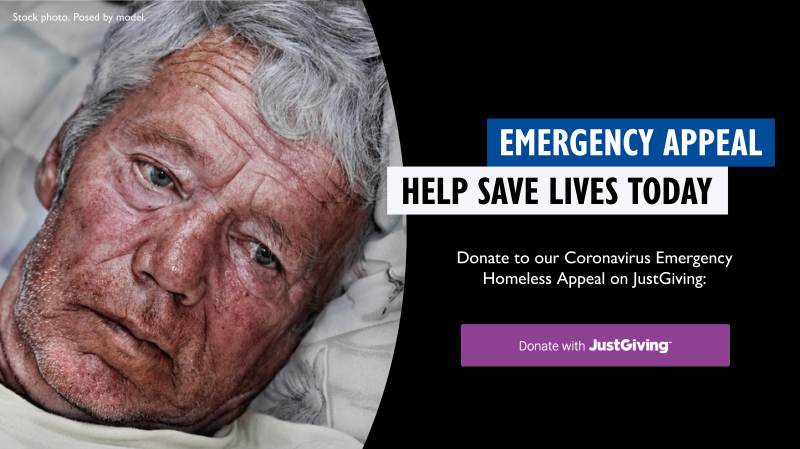
As you know, here at Alabaré we are working with very vulnerable people. The homeless people we support are extremely vulnerable to Coronavirus; 75% of our homeless clients have underlying health issues and many have no one else to turn to.
Our dedicated teams are on the front line working around the clock to keep our clients safe. We are getting rough sleepers into our homes where we can support them if they fall ill, and helping vulnerable and scared people to self-isolate, making sure they have a safe home, food and medication in this time of urgent need.
‘Rough sleepers do not have access to the soap and water we are all using to help protect ourselves. They do not have the means to self-isolate. The vast majority are more susceptible to illness and many have complex underlying health problems. If the virus does spread, homeless people could be amongst the first to die.’
Sue, Alabaré Homeless Service Manager
Coronavirus is already putting huge strains on Alabaré financially. Our charity’s services are facing unprecedented challenges and are putting emergency procedures into place. Our fund-raising events over the next 6 months have all had to be postponed and we are facing an immediate loss of at least £100,000 at a time when we desperately need that money to help save lives. If we are unable to raise this money quickly, this virus threatens our charity’s survival.
You can access the online appeal through our website (link below), by cheque to ‘Alabaré Christian Care & Support’ or I would be delighted to send you our bank details if you are able to make a direct transfer.
https://www.alabare.co.uk/news/coronavirus-emergency-appeal
 Wilton Parish
You must be logged in to post a comment.